In recent months I’ve been to the Luigi Ferraris stadium a few times to watch Genoa play. It sits in Marassi, wedged between the Bisagno riverbed, a main road, a prison and a listed fourteenth-century villa, with four red-brick towers planted at its corners like chess rooks. Those towers are not decoration. They went up between 1987 and 1989, when Vittorio Gregotti rebuilt the ground for the World Cup, and they are the most honest thing in the city about what that summer was. Genoa got a stadium that people still admire. Most of Italy got something else.
For three weeks in 1990 the country threw the biggest party it could afford, and then some. The 1990 World Cup is remembered for the nights, the Pavarotti, the Schillaci stare, Ireland and Romania and Packie Bonner’s hands. That is the version that survives. What does not survive in the highlight reel is the invoice. By the time the bills landed, Italia ‘90 had cost over 7000 billion lire, somewhere around four billion euros in today’s money. As late as 2014 the Italian Treasury was still paying 50 to 60 million euros a year to service the debt from a football tournament that had ended a quarter of a century earlier.
The organisation was a disaster dressed as a triumph. Of the 233 infrastructure projects planned around the tournament, only 95 were finished by the time the first ball was kicked. Some were completed late. Some were never completed at all. A few were finished, used for a handful of days, and then locked shut forever. Those are the ones worth talking about, because they are still out there, concrete ghosts with the lights off.
Rome’s stations to nowhere
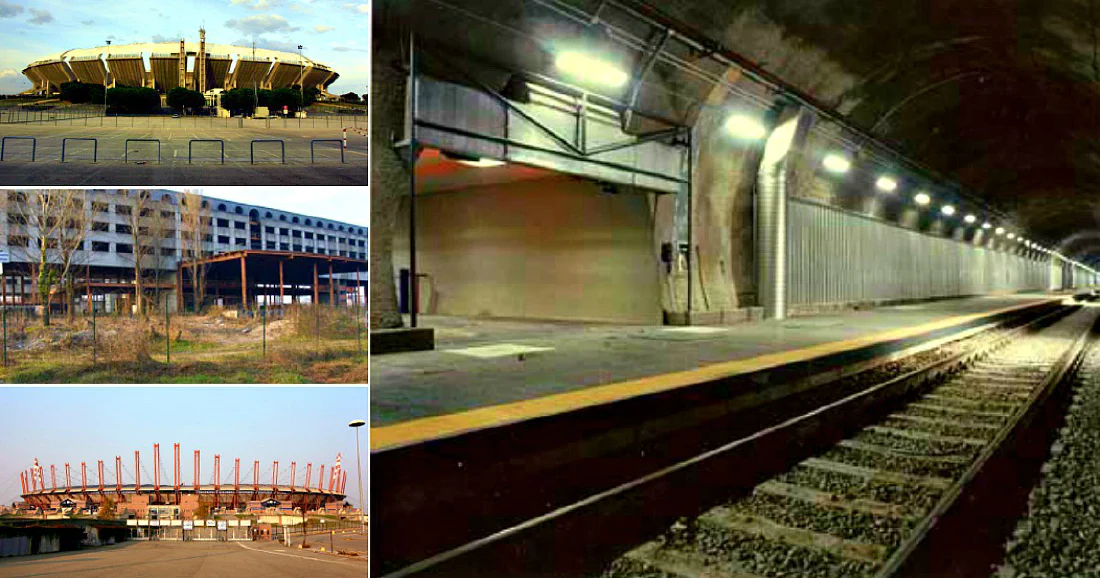
Rome built two railway stations to move fans to the Stadio Olimpico, and managed to ruin both. The Olimpico-Farnesina stop cost 15 billion lire and was undone by arithmetic. It was meant to carry two lines and could only fit one. Whoever signed off on the plans had also placed it a kilometre from the stadium along a busy road, which is a strange thing to do to people you expect to arrive by the tens of thousands. It served six matches and closed.
Further up the same line sat Vigna Clara, an 80 billion lire station that opened for the World Cup, ran for about a week, and then went dark for 32 years. Residents fought its reopening for fear of the vibrations rattling their buildings. It finally came back to life in June 2022, which is a very Italian length of time for a railway platform to wait for its first ordinary commuter.
Rome built a grand postmodern air terminal at Ostiense, designed by the Spanish architect Julio Lafuente, to whisk passengers to Fiumicino airport. The demand never came. The building emptied out and decayed for two decades. Today it is the Rome flagship of Eataly, the upmarket food chain, which means a structure built to carry travellers to a plane now sells aged parmigiano and 20-euro pasta…
The metro that never carried a soul
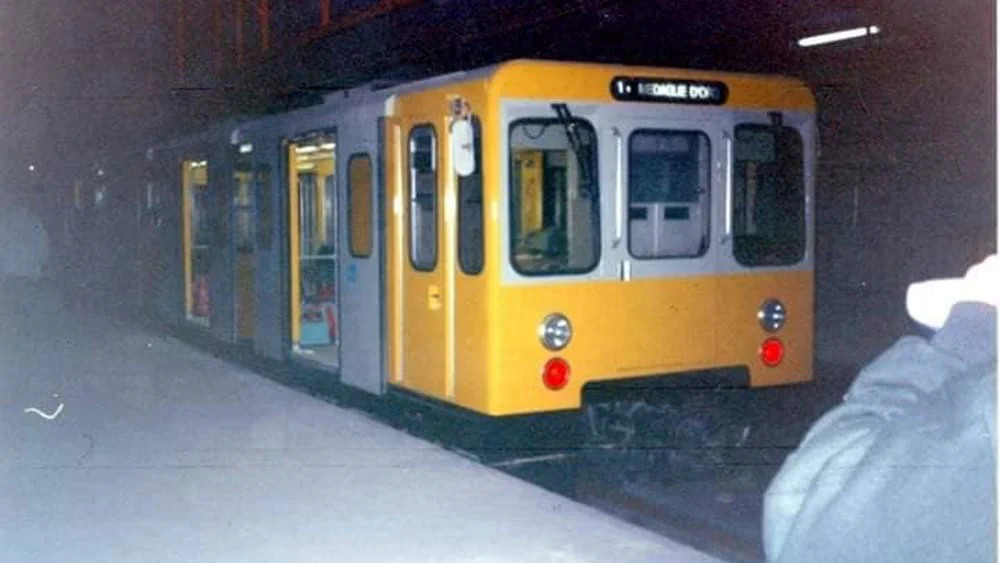
Naples saw the World Cup budget the way a drowning municipality sees a rope. The city had wanted a light metro since the 1980s and ran out of money before it could build one. Italia ‘90 revived a piece of it, an underground stretch out to the west. Then, a few months before kickoff, the diggers hit geology that the surveys had somehow missed.
So they improvised. They cut the line short and threw up a temporary station a few hundred metres from where it was supposed to end, a thing described at the time as a deep well with a precarious iron staircase. They tested the route in May 1990. It never carried a single supporter to the San Paolo. The station never passed its safety inspection, and the whole line sat dead until it was folded into what is now Metro Line 6 in the mid-2000s. Fifteen years asleep before it did the one job it was built for.
Cathedrals in the desert
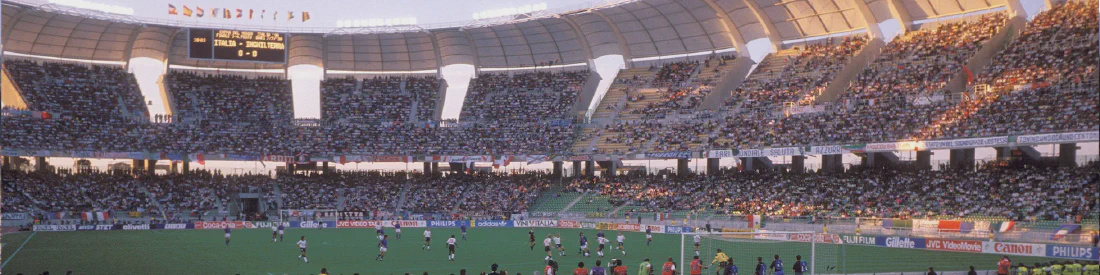
There is a phrase Italians use for this, cattedrali nel deserto, cathedrals in the desert, grand structures built where nobody needs them. Italia ‘90 produced two purpose-built stadiums, and both earned the name.
Bari got the prettier one. The commission went to Renzo Piano, who is Genovese like the city I am writing this from, the man behind the Pompidou in Paris and later the Shard in London. For 153 billion lire he designed a thing shaped like a flower, 26 elevated petals of white concrete lifted off the ground. The San Nicola is genuinely beautiful. It is also stranded out of town, saddled with an athletics track that pushes the crowd away from the pitch, and topped with a roof that aged badly. It hosted five World Cup matches and the 1991 European Cup final, then slid into neglect. It remains the third-largest stadium in Italy, currently watching Serie B football echo around stands built for a different ambition.
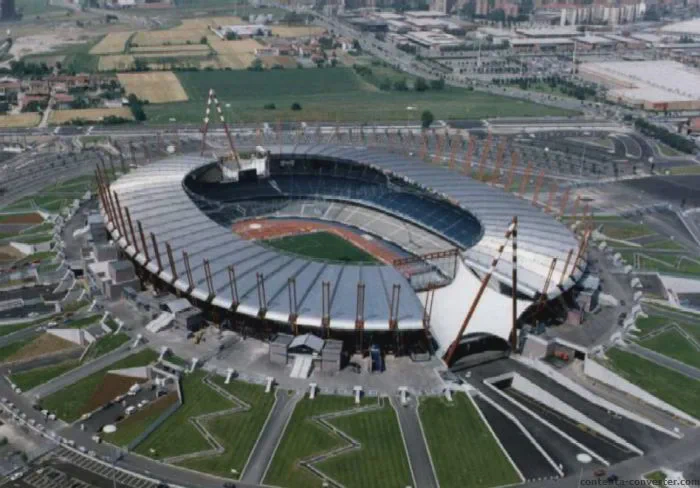
Turin got the cautionary tale. The Stadio delle Alpi cost even more, 226 billion lire, and the public never warmed to its cavernous 69,000 seats and its running track holding the fans at arm’s length from the game. Torino and Juventus both abandoned it for the refurbished Stadio Olimpico in 2006. Juventus bought the land, knocked the whole thing down in 2009, and built their own ground on the rubble. That ground is the Allianz Stadium, and I will say this plainly because the internet keeps getting it wrong: it is not the Allianz Arena. The Allianz Arena is Bayern Munich’s. Juventus play at the Allianz Stadium, which opened in 2011 and replaced a World Cup venue that had served as a home ground for barely sixteen years. A working life shorter than a mortgage.
Naples’ dead tier
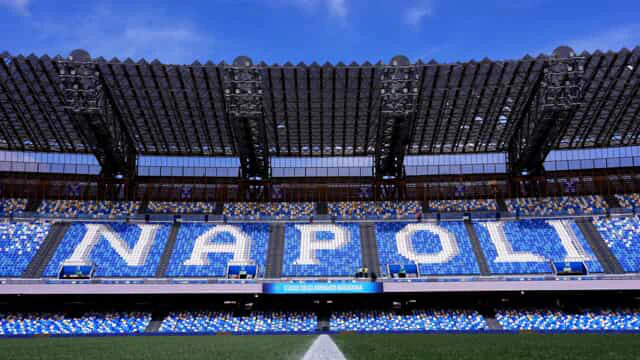
The old San Paolo, now the Stadio Diego Armando Maradona since they renamed it in 2020, got a different kind of upgrade. They wrapped an iron frame around the outside to hang a new roof and bolt on an extra tier of seats. It worked, for a while. Then engineers discovered that Napoli fans jumping in the top ring were sending vibrations down the metalwork that threatened the stadium and the buildings around it. The third tier was shut in 2005 and has stood empty ever since, a full level of a football ground sealed off because the crowd was too alive for the architecture. There is now talk of finally reopening it. I will believe it when I see the turnstiles spin.
Milan’s monster
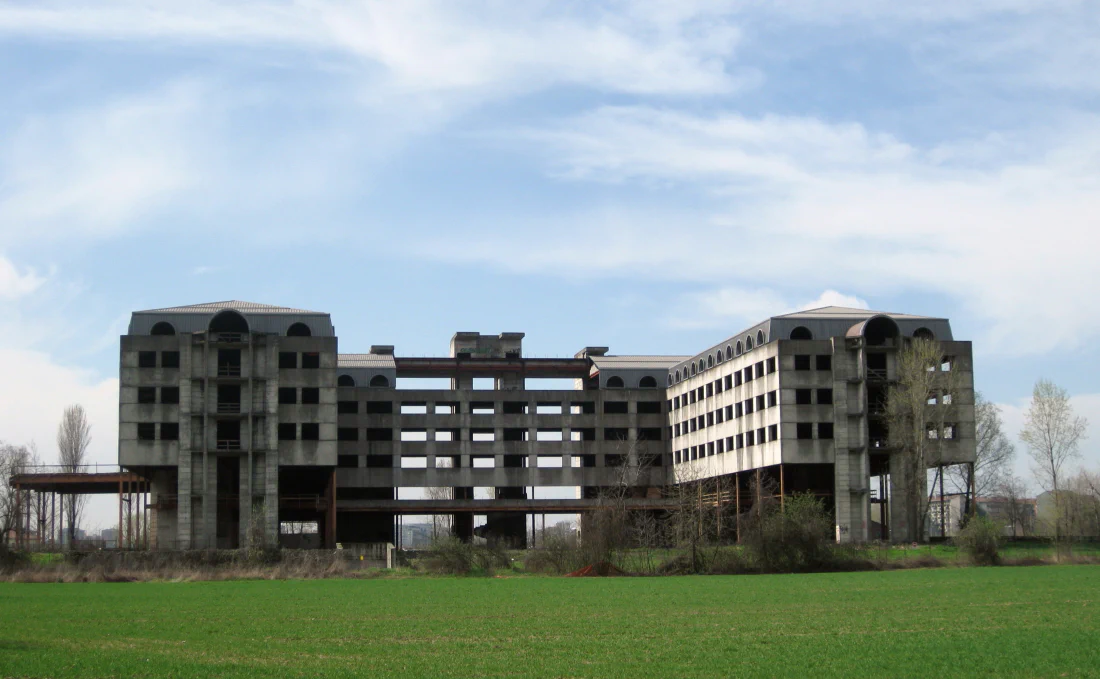
Milan’s contribution barely got built at all. In the suburb of Ponte Lambro, on a floodplain by the Lambro river, work began on a luxury seven-floor hotel, 300 rooms for the dignitaries and supporters who were coming to the magical nights. The builder ran out of time and, once the tournament passed, ran out of reasons to finish. The special law that had greenlit the whole thing was later ruled illegal, the building rights evaporated, and what remained was a concrete skeleton on bad ground.
Milan has a word for that too. They called it the ecomostro, the eco-monster. For nearly twenty years it stood as the single ugliest symbol of everything Italia ‘90 wasted, a haven for vandals that the city kept proposing to turn into a prison, then a university hall, then a hotel again, and never did. It was finally torn down in 2012, in about 150 days, which is faster than it took to decide what it should have been.
The view from Marassi
Which brings me back to the towers I started with. Genoa came out of that summer better than most. The Ferraris is still standing, still beautiful, still considered one of the finest grounds in the country, and Genoa and Sampdoria are now lined up to renovate it again, a 100 million euro job pencilled in for 2027 to 2029 in exchange for a 99-year lease. The towers stay. That is the rare Italia ‘90 story that ends with the building still being loved.
Italia ‘90 was a great World Cup. The nights were real. The show was real. And so are the empty stations, the sealed tiers, the cathedrals in the desert. The country is still paying for it.