When I entered the tech industry in the back half of the 2010s, high-level languages were already the default. When I studied Computer Engineering, even embedded systems were written in C++, and that was considered the low level. In the software and games world, the abstraction went even further. Java dominated the industry, and Unity was in the middle of democratizing game development to the point where anyone with a free weekend could ship something playable.
But there was a time when programmers had no such luxury. No layers, no safety nets. You worked directly on the hardware, at the lowest possible level, choosing the exact memory address to write to and the exact instruction for the processor to execute.
As someone born in the early 90s, at the tail end of the Millennial generation, I grew up with PCs, which were already the established standard when I got there. I knew nothing of what came before. Names like Atari ST, Apple II, Commodore Amiga, ZX Spectrum were things I could vaguely place somewhere in the 1980s, but I could not have told them apart if you lined them up in front of me. My first computer was an early 2000s machine running Windows 98, with an astonishing 512 MB of storage. I do not remember all the specs, but I know it was already obsolete at the time, a donation, machines discarded by the local football club. That was my technological childhood. For a long time, that was retro computing to me.
It was not until 2021, through the Brazilian podcast “Primeiro Contato”, that I discovered the old new world of retrocomputing and microsystems. The podcast, produced and narrated masterfully by Henrique Sampaio, tells the story of how computers and the internet arrived in Brazil. Setting aside the Brazil-specific context, I could not stop imagining what it must have felt like to live through the 1980s as a programmer. That particular mix of curiosity and programming byte by byte, with no abstraction to catch you, genuinely fascinated me.
With that humble background, I am proposing a series of posts called “Programming as if it were 1982”, to explain to latecomers like myself how programming worked 44 years ago.
The State of Computing in 1982
The early 1980s were the moment computers left research centers and landed in living rooms. Plastic boxes connected to the family TV, sold in electronics stores next to radios and kitchen appliances. People who were there describe it as standing in the middle of something completely new, with no clear sense of where it was all going.
The market exploded, but it was completely fragmented. Dozens of manufacturers launched incompatible machines. Atari, Apple II, ZX Spectrum, TRS-80. Each with its own processor, its own architecture, its own ecosystem. The IBM PC had just launched, but it was still an enterprise system that would take years to achieve mass adoption through its clones. That is a story for another time.
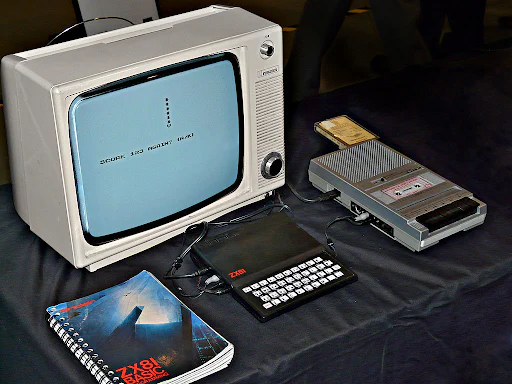
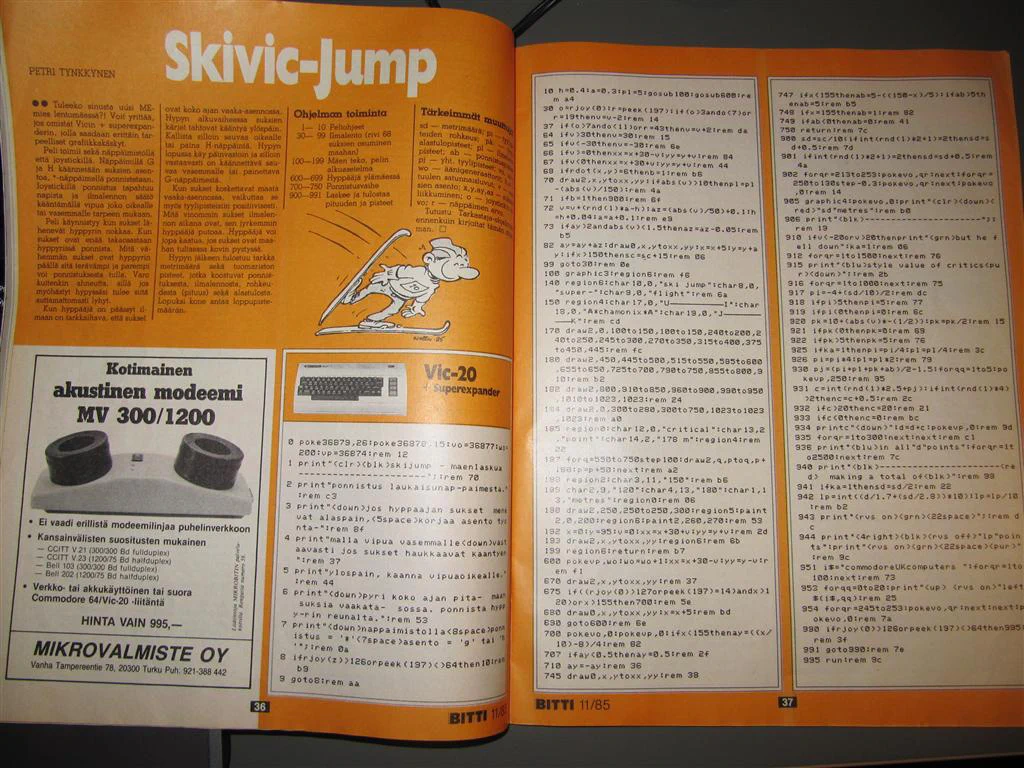
Software came on cassette tapes or floppy disks, bought in stores or copied at a friend’s house. And then there were the magazines. Microcomputer publications were the enthusiast hubs of the era, and it was completely normal for their pages to be filled with nothing but source code, printed out for the reader to type in line by line at home. That kind of exercise, which sounds tedious and painfully manual by today’s standards, is one of the key ingredients in the nostalgia people who actually lived through that period carry with them. I am a little jealous of that, honestly.
The Commodore 64
In that landscape, in August 1982, Commodore Business Machines launched the computer that would become the best-selling single model in history. The name said it all. Commodore 64, yes, 64 kilobytes of RAM. At a time when competitors were selling machines with 16 or 48 KB, that number meant something. The launch price was $595, expensive for the average consumer, but cheap for a personal computer. In just a few months, Commodore slashed prices aggressively and pushed a large part of the competition out of the market entirely. Between 12 and 17 million units are estimated to have been sold over its lifespan, a record that stands to this day for a single computer model.
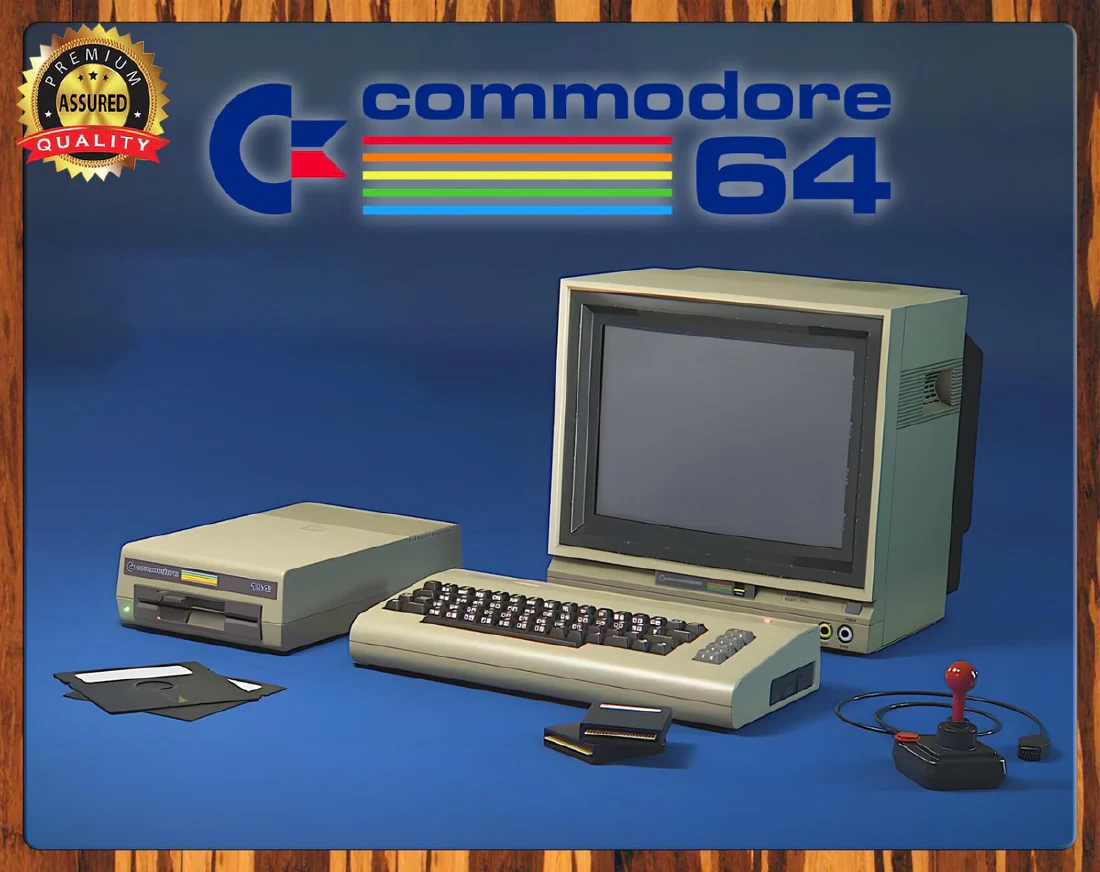
But what made the C64 special was not just price or memory. It was the hardware inside. While competitors delivered basic video and sound, the C64 came with three chips developed internally at Commodore, each one exceptional for its time.
The MOS 6510 was the processor, an evolution of the legendary 6502, running at 1 MHz, simple and documented down to the last bit. The VIC-II was the video chip, capable of displaying 16 colors, moving up to 8 independent sprites on screen, producing smooth scrolling, and generating effects other computers of the era simply could not replicate. And the SID was the sound chip, a complete synthesizer with 3 independent voices, programmable waveforms, filters, and amplitude envelopes. So sophisticated that decades later musicians were still hunting down original chips to make music with. The SID did not sound like an 8-bit computer. It sounded like a real instrument.
There was no operating system protecting anything. No exceptions, no friendly error messages. If you wrote to the wrong address, the computer crashed or behaved unpredictably, and you hunted down the problem yourself. In exchange for that, you had total control. No layer between your code and the machine.
BASIC and Assembly
When the C64 powered on, the first thing you saw was a blinking cursor and the message READY. That was the BASIC prompt, the language burned into the computer’s ROM, ready to use without installing anything.
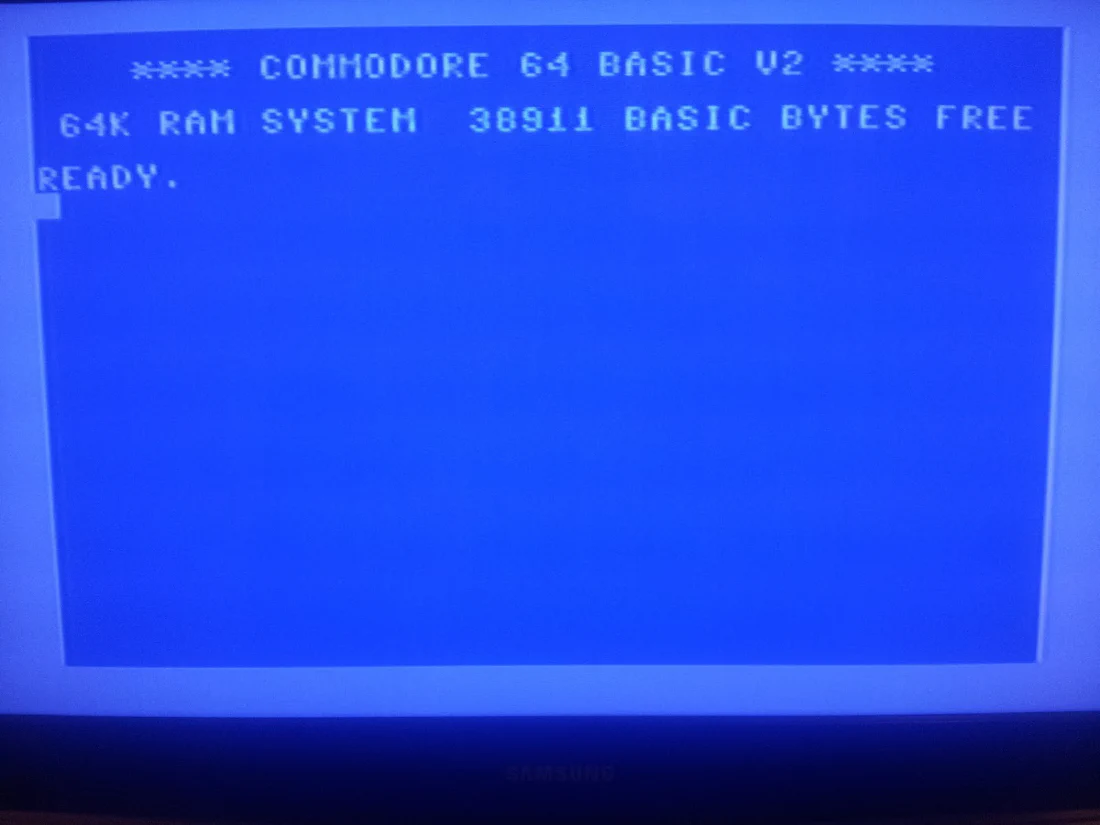
BASIC stands for Beginner’s All-purpose Symbolic Instruction Code. It was designed to be simple enough for anyone, no technical background required. You typed directly at the keyboard and saw the result immediately. Children learned it in schools. Magazines published programs for readers to type in. Parents and kids explored it together. BASIC was responsible for democratizing programming in the 1980s, and many of the people who later mastered assembly and C started by typing PRINT "HELLO" on a rubber keyboard in the living room.
The problem was exactly one, and it was speed. The C64’s BASIC was interpreted, meaning that every time a program ran, each line was read, translated, and executed on the spot, one at a time. That real-time translation consumed most of the processor’s power. A simple loop in BASIC ran about 1,000 times per second. The same loop in assembly ran 1,000,000 times per second. A difference of 1,000x.
For a game that needed to move sprites, detect collisions, play music, and respond to the joystick, all within 1/50th of a second per frame (for european PAL machines), BASIC was not fast enough. It was fine for simple calculations, utilities, and learning the fundamentals. For games and demos, it was a dead end.
Assembly was the opposite of BASIC in almost every way. Where BASIC was translated at runtime, assembly was translated beforehand by a program called an assembler. The result was pure machine code, bytes that the processor executed directly, with no intermediary. No interpretation layer. Every instruction you wrote became exactly one or a few bytes in memory, executed with zero overhead.
The gain was obvious but the cost was real. You got the full speed of the machine, and you gave up every convenience BASIC offered. No automatic PRINT, no named variables, no built-in FOR or IF. You controlled every register, every byte of memory, every clock cycle. Tedious and granular. But it was the only way to make the hardware deliver everything it was capable of.
In practice, the two worlds coexisted. Many programmers wrote the main structure in BASIC and called assembly routines only in the parts that demanded speed. Pragmatic, not ideological.
There was no Stack Overflow. No YouTube tutorials. No online courses. There were magazines. Publications printed code on their pages, and the reader typed each line by hand on the C64 keyboard, hoping not to mistype a single character. The hardware manuals were the holy texts. The Commodore 64 Programmer’s Reference Guide, a 493-page brick, described every register of every chip, every memory address, every processor opcode. Master that book, and you mastered the machine. Completely.
Why Study This Today
You can spend an entire career in Python or JavaScript without thinking about registers once, and that is perfectly fine. That is the whole point of modern abstractions. They work, and they let you focus on building things rather than managing memory manually.
But there are moments when the floor disappears and you need to understand what is underneath. When a system must respond in microseconds, whether in high-frequency trading, signal processing, or games with complex physics, knowing how hardware actually works stops being optional. Microcontrollers in appliances, cars, and medical equipment are still programmed close to the metal, and the logic of an Arduino is a direct descendant of what we will cover in this series. Vulnerabilities like buffer overflows exist because high-level code eventually becomes bytes in memory, and memory has no opinion about what you do with it. People who understand this level understand why these vulnerabilities exist, not just how to patch them.
There is also something harder to quantify. There is a difference between knowing how to use a tool and understanding how it works. A compiler is not magic, it is a systematic transformation of text into machine instructions. An operating system is not a mystery, it is a program that manages memory, CPU time, and hardware access. People who have programmed close to the metal see this clearly, because they once did that work by hand.
The C64 is an ideal starting point precisely because its processor has a small instruction set, roughly 56 instructions in total, compared to the hundreds in a modern x86. You can learn the entire architecture in a few weeks. The hardware is mapped directly to memory, so the relationship between code and effect is immediate. Write a byte and the screen changes, a sound plays, a sprite moves. Nothing is hidden. And there are accurate, free emulators available today, like VICE, that let you run and debug C64 code on any modern computer.
In the next posts we will descend this stack of abstractions. Not to discard what you already know, but to understand where it came from. We will learn how the processor stores data, how memory is organized, how instructions execute, how decisions are made, and how writing to an address can make a musical note play or a sprite move across the screen. In the language of someone who actually programs, no mysticism required.
Edit, May 9, 2026. This series assumes at least a basic familiarity with programming. Variables, loops, conditionals, a data structure or two. If you have more experience, some posts will feel too basic. That is intentional. The goal was to make this accessible to anyone curious, not just people with a computer science background.