Anyone who knows me knows that my favorite movie is Unforgiven (1992), a western directed, produced, and starring Clint Eastwood. I savored the mastery of the first season of the series Westworld (2016). The ending of Red Dead Redemption (2010) touched me personally. I love the feeling of being in the world of Red Dead Redemption 2 (2018). Furthermore, I have a mini-collection of TEX comics (which I’ve read less than I’d like). What I mean is that for me, the Old West has a certain charm. But don’t think my enchantment is with John Wayne-style worlds, of incorruptible good guys fighting evil (evil being indigenous peoples and Mexicans). It is the charm of the post-western: a genre that demystifies the gunslinger, where moral ambiguity reigns and the violence of a lawless land is as impregnated in the characters as the mud encrusted on their boots.
With that personal taste now described, I started watching Deadwood (2004), an HBO series set in 1876 in a mining settlement that, until then, was outside the laws of the United States. Disease, violence, totally ambiguous morality, filth, etc. Everything that classic shoot-’em-up movies ignored is found here. Except for one thing that has always existed, both in the genre and in reality itself, which also appears in the series: prostitutes.
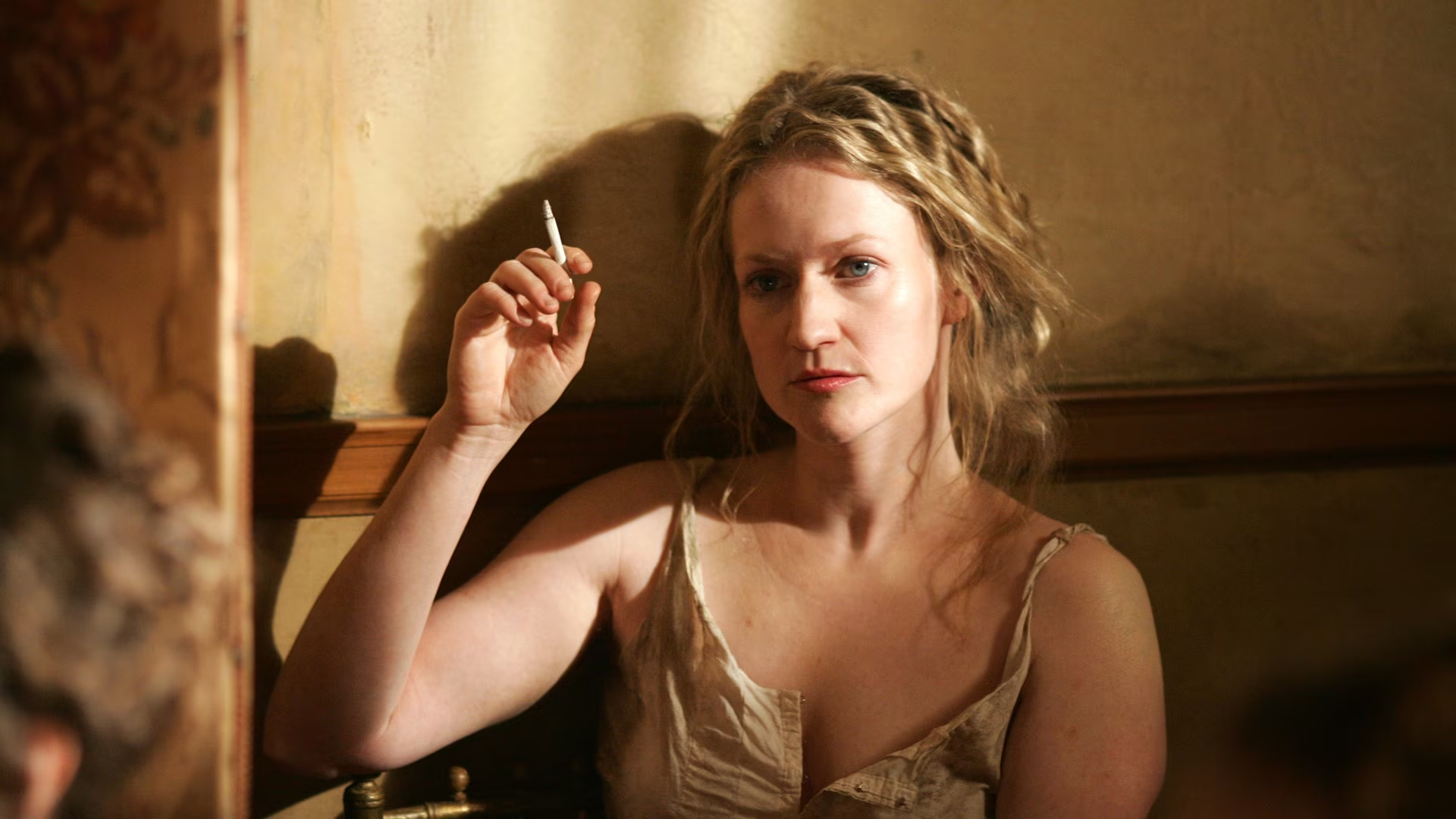
In Deadwood, however, this post-western takes a step beyond the nihilism of gunslingers and throws in our faces the cheapest meat in the camp. In one of the episodes, the character Trixie, a prostitute, drops an affirmation that paralyzed me before the screen due to its absolute lack of drama: she comments, with the coldness of someone reporting a routine and boring gynecological task, that she has already terminated seven pregnancies by taking pennyroyal and cohosh tea. There is no tearful monologue, only the hardened, empty gaze of someone who shrugs and thinks, “After all, that’s life, isn’t it?” Seven times drinking botanical poison in a filthy room to induce her own abortion.
Here, an explanation is worth providing: pennyroyal and cohosh tea was a highly toxic botanical combination used in 19th-century folk medicine as a powerful chemical abortifacient. Pennyroyal acted by stimulating menstrual flow but carried pulegone, a highly hepatotoxic substance that directly destroyed liver cells. Cohosh (mainly blue cohosh) worked as a severe uterotonic, injecting alkaloids into the organism that provoked violent uterine contractions and coronary vasoconstriction, forcing the uterus to expel the fetus while spiking blood pressure. Mixed together, these herbs operated on the woman’s body like a biological press. There was no gynecological precision: the method consisted of inducing a sub-lethal poisoning strong enough for muscle spasms and toxicity to break the pregnancy by brute force. It was a chemical Russian roulette where the margin between aborting and suffering fatal liver or heart failure was terrifyingly narrow.
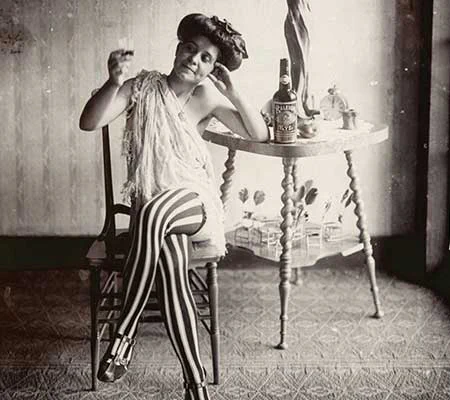
This small pill of reality destroys any romanticism that entertainment has tried to sell us for a century. In the classic Western, the prostitute was domesticated under the sympathetic label of the “saloon girl”: a smiling damsel in a silk corset and colorful feathers in her hair, floating through the bar distributing flirtations and serving as a rest for cowboy heroes. Commercial fiction replaced oppression with charm, transforming what was daily biological violence into a background fetish.
But the real women of the 1870 frontier did not inhabit a John Wayne movie. They were part of a hyper-capitalist and savage machine where their bodies were treated exactly like the local gold mines: a material infrastructure to be exploited at an accelerated pace until the total exhaustion of the vein. To understand the depth of the abyss between the television myth and the real blood encrusted on the wooden floors of these brothels, I had to step out of fiction and dive into the historical archives brought by historian Anne M. Butler in her fundamental work, Daughters of Joy, Sisters of Misery: Prostitutes in the American West, 1865–1890. And what I found there buries the clean-suited cowboy once and for all.
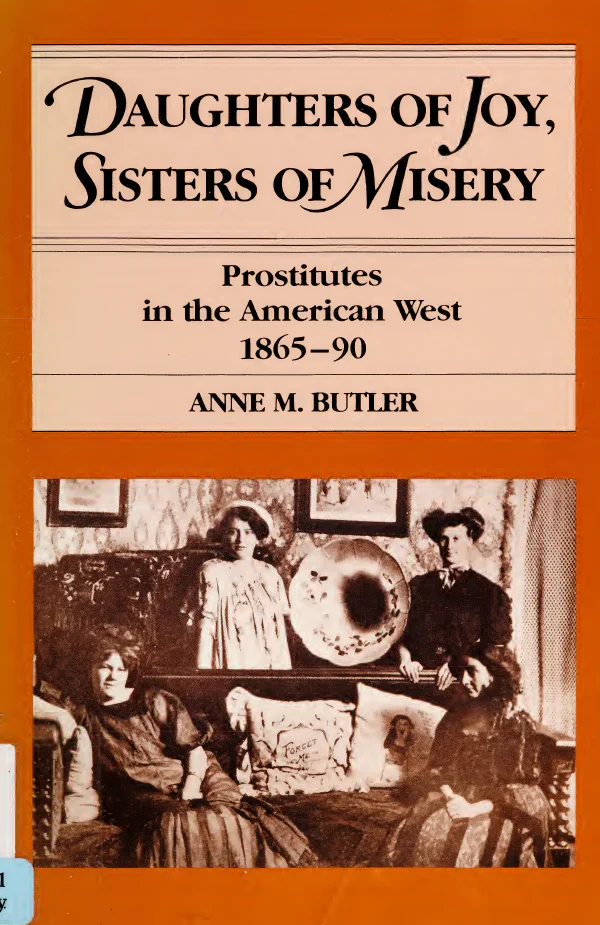
The gold economy shaped the logic of brothels in a much deeper way than clean-shootout westerns suggest. In the Old West, the mentality was purely extractivist: it was about aggressively sucking the natural resource until the vein ran completely dry, and the system operated on the same gears with women’s bodies. Anne Butler sheds light on this dynamic by exposing, for example, the case of brothel owners in Hemphill County, Texas, who married the prostitutes in their own houses to consolidate legal ownership of every penny they generated. Far from being an act of rescue or affection, marriage there was a contract of perpetual exploitation where husbands demanded their wives stay on the streets to fatten the business’s coffers. The financial slaughter was purely mathematical and abusive. While an average male guest in Wichita paid about six dollars a week for lodging, a prostitute paid fourteen dollars for the same space, in addition to being forced to hand over a third of everything she earned from clients to the house management. They were suffocated by a cruel financial carousel, designed so that they would never accumulate enough capital to buy their own freedom.
It is within this logic of industrial production that pregnancy ceased to be an intimate matter or a moral dilemma and transformed into a catastrophic defect in the assembly line. In frontier camps, an individual’s value was measured strictly by their capacity to generate daily revenue. A sick miner did not extract ore; a pregnant woman meant idle machinery, lost profits, and passive costs for the business owner. Therefore, the cocktail of pennyroyal and cohosh that Trixie swallowed in Deadwood was not the exercise of a reproductive right in a land of free pioneers; it was forced industrial maintenance, a brutal and painful chemical repair required by the system so that the biological asset could return to production as quickly as possible.
If fiction makes us believe that these teas were home remedies administered with some romantic sweetness among companions in misfortune, the judicial archives raised by Butler violently tear away this last layer of illusion. Abortion on the frontier was a Russian roulette of infection, hemorrhage, and death. In Tombstone, records reveal that an older prostitute, who managed a small operation, killed a young colleague during a rudimentary, poorly executed abortion in the back of the establishment. In the Black Hills, in 1884, the local newspaper detailed the trial of Elizabeth Orr for homicide resulting from an illegal abortion. The crudeness was such that, in Laramie in 1877, prostitute Mary Kean was criminally prosecuted by the State on the explicit charge of concealing the corpse of a fetus, abandoning the remains of one of these forced terminations without giving it a legal burial. The social fabric of the frontier tolerated abortion to keep the biological consequences of the sex market invisible to respectable families, but punished women when the blood overflowed into the public space.
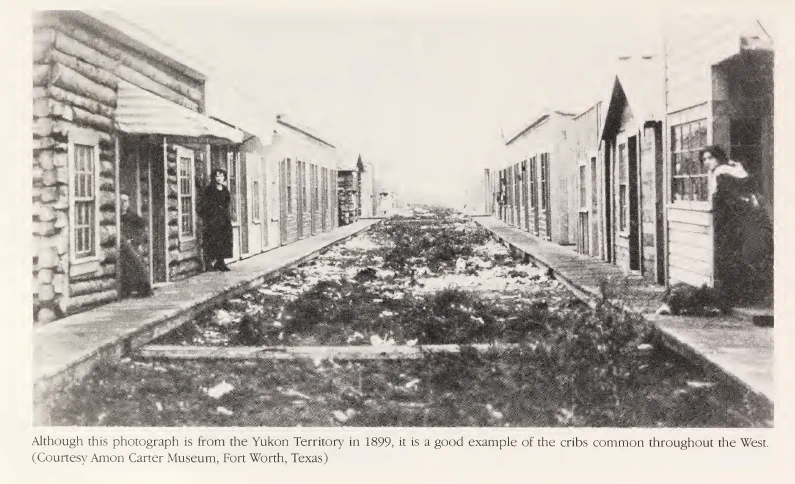
The final fate of those who survived this routine of voluntary poisoning was programmed biological disposal. Youth was the only capital these women had, and the peak of their careers rarely lasted past their thirties. As they aged or presented physical sequels caused by abortions and dissipation, they were summarily expelled from the central saloons and demoted to the “cribs,” miserable shacks in filthy alleys.
This voluntary and systematic poisoning was not a desperate exception, but the central gear that kept the sex market functioning in a land devoid of any medical, social, or welfare safety net for the vulnerable. Going through this ordeal repeatedly was the true silent executioner of the women of the West, a hidden gynecological violence that collected its price during the off-hours of clients’ pleasure. Faced with a society that offered no economic alternatives, the choice remaining to these young women was of atrocious brutality: either they sabotaged their own organisms with dangerous mixtures, or they faced the absolute misery caused by the immediate loss of their commercial value on the brothel’s production line. Rudimentary abortion was the most frequent and dangerous rite of passage on the frontier, so much so that for the few who managed to survive the wear and tear of the trade and cross the thirty-year barrier, the only way to continue subsisting in the industry was to take on the role of the camp’s abortionist themselves, perpetuating the cycle and managing the same risk for the younger girls starting their journey.
When we think of the Old West, the iconic image that pop culture shoves down our throats is always that of the lone cowboy, the indomitable gunslinger with his revolver on his hip, shaping the destiny of a nation with gunpowder. However, the historical truth that Anne Butler’s book lays bare is that these men were, at best, temporary agents of a violent and predatory expansion. Those who really paid the highest price to fix the foundations of these societies in the frontier mud were the women that official history preferred to erase. And we are not talking about a romanticized narrative of perfect sisterhood; Butler herself makes a point of noting that the reality for these women was so brutal that even the relationships between them were frequently marked by distrust, rivalry, and the violence generated by the confinement of the brothel itself. Still, it was they who gathered in the middle of the night to clean the blood, dress the bodies of dead companions with dignity, and pool the few dollars they had to ensure a grave, assuming a funerary and human responsibility that men and the State simply ignored. They were involuntary institutional pillars of a West that consumed their lives while pretending they were nothing more than invisible ghosts.
There is a perverse irony in the fact that the bodies and capital of these women were systematically used to build and finance the infrastructure of cities (through arbitrary fines that paved streets and erected public buildings), only for them to be the first swept into the margins of oblivion once so-called “civilization” was established. Frontier society never truly accepted them: their noisy visibility was merely the convenient tolerance of a profitable market. When stability arrived, puritanical moral rigidity saw to pushing them into definitive ostracism, erasing their names from the territory’s records of progress. The cowboy kept the glamour, the heroism, and the monuments on cinema screens. They were left with the anonymity of mass graves, bodies destroyed by pennyroyal, and institutional erasure.
For all these reasons, the next time I press play on a post-western movie or ride through the virtual landscapes of Red Dead Redemption, my gaze will no longer be dazzled by the glow of duels in the sun. I will remember Trixie. I will remember that behind every picturesque saloon or dusty little town in the American West, there is the biological sacrifice of women who had to swallow poison just to have the right to continue existing the next day. They were not the smiling damsels of John Wayne movies, nor the incorruptible heroes in clean suits. They were the true, tragic, and forgotten survivors of the American frontier.